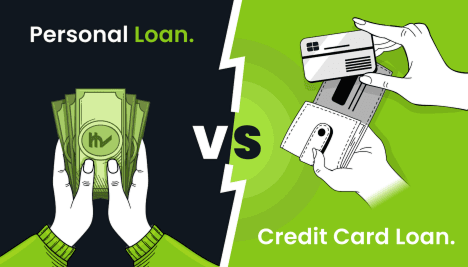
Credit Cards and Loans Aren't the Same
Both can provide access to credit.
But they're designed differently.
A credit card is generally a revolving credit facility.
A personal loan typically provides a fixed amount that is repaid according to a defined schedule.
Credit Cards
Credit cards can be convenient for purchases and can provide payment flexibility.
But carrying a balance can result in interest and other charges.
BSP advises consumers to understand credit-card interest, fees, due dates, and total amounts due, and warns against relying only on minimum payments because doing so can extend repayment and increase interest costs.
Personal Loans
A personal loan generally provides a predetermined amount and repayment structure.
This can make budgeting easier because you know the expected repayment schedule.
However, the actual terms vary by product.
Which Is Better?
There isn't one answer. Consider:
Amount Needed
How much money do you actually need?
Purpose
Are you financing a purchase or addressing a broader financial need?
Repayment Period
How quickly can you realistically repay the obligation?
Total Cost
What will you pay in total?
Existing Debt
Will this create excessive monthly obligations?
Don't Compare Monthly Payments Alone
A ₱2,000 monthly payment isn't automatically cheaper than a ₱2,500 payment.
Look at the entire repayment period.
For example: ₱2,000 × 12 months = ₱24,000, while ₱2,500 × 6 months = ₱15,000.
The second payment is higher each month but results in a much lower total payment in this simplified example.
Final Thoughts
The best financing option depends on your needs and financial capacity.
Don't choose based solely on monthly payment, advertising, convenience, or maximum available amount.
Compare the complete cost and make sure the obligation fits your budget.
Was this article helpful?